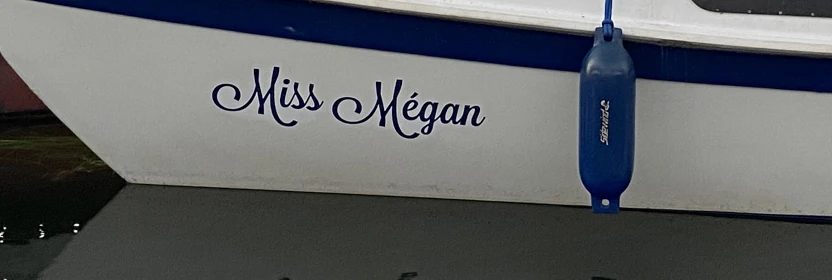
I posted about this issue back in August 2025 in Sitting Low. If you haven’t read that post, here is the Coles/Cliffs notes version of that post. The waste water tank under the v-berth bunk was filled with clean water which was causing the bow to dip 8 to 10 cm (3-4 inches), perhaps more, deeper than the stern, as you can see in this picture.
I had thought that this had been intentional. I thought the water was being used as a counter weight by the previous owner to offset their weight and a larger outboard motor, and when the motor was replaced with a smaller lighter one he forgot to remove some water.
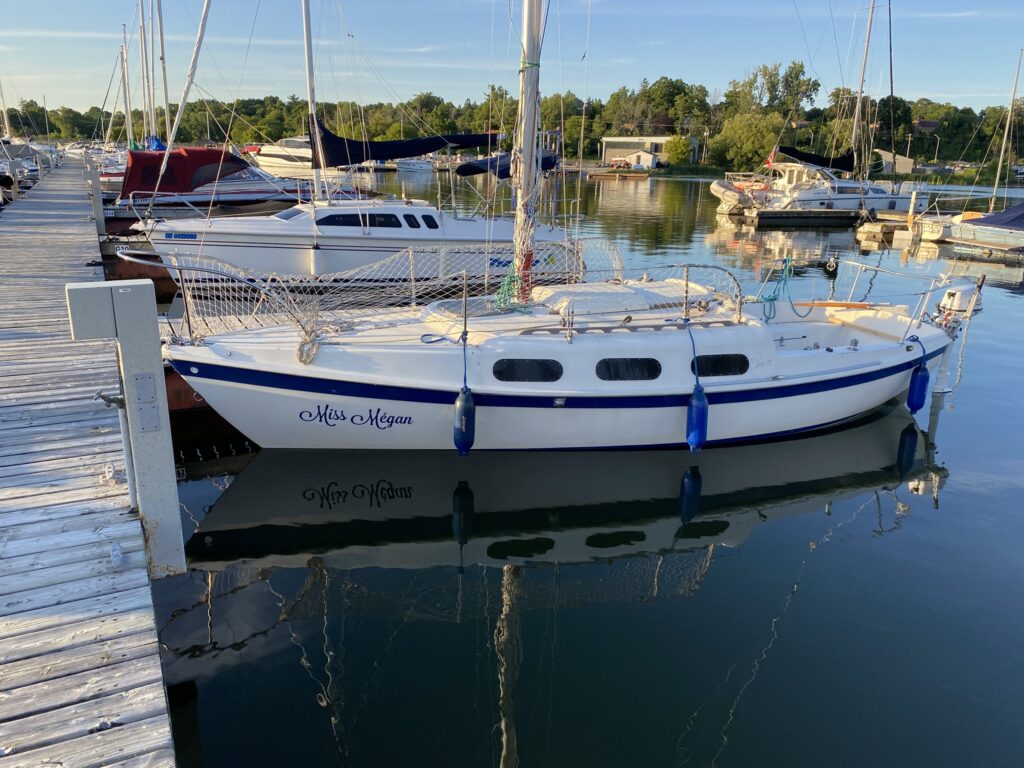
Well it turns out that I was wrong. After launching I noticed the bow was low again but since she had been low for most of her first season with me, and that I had a lot of equipment in v-berth I didn’t really pay much attention to how she was sitting. Then a few days later I got a phone call from the marina, the same call that I got last year, “Miss Megan’s bow is low, a fellow boater alerted us, so we’re calling to let you know in case there is a problem”. I was annoyed, not at the call but because they had to call. I am grateful someone noticed, grateful they let the marina know, and grateful that the marina owners called to let me know. I’m annoyed that I didn’t notice first, annoyed that a problem I thought resolved had returned, and annoyed that I had to track down why the bow was dipping this time.
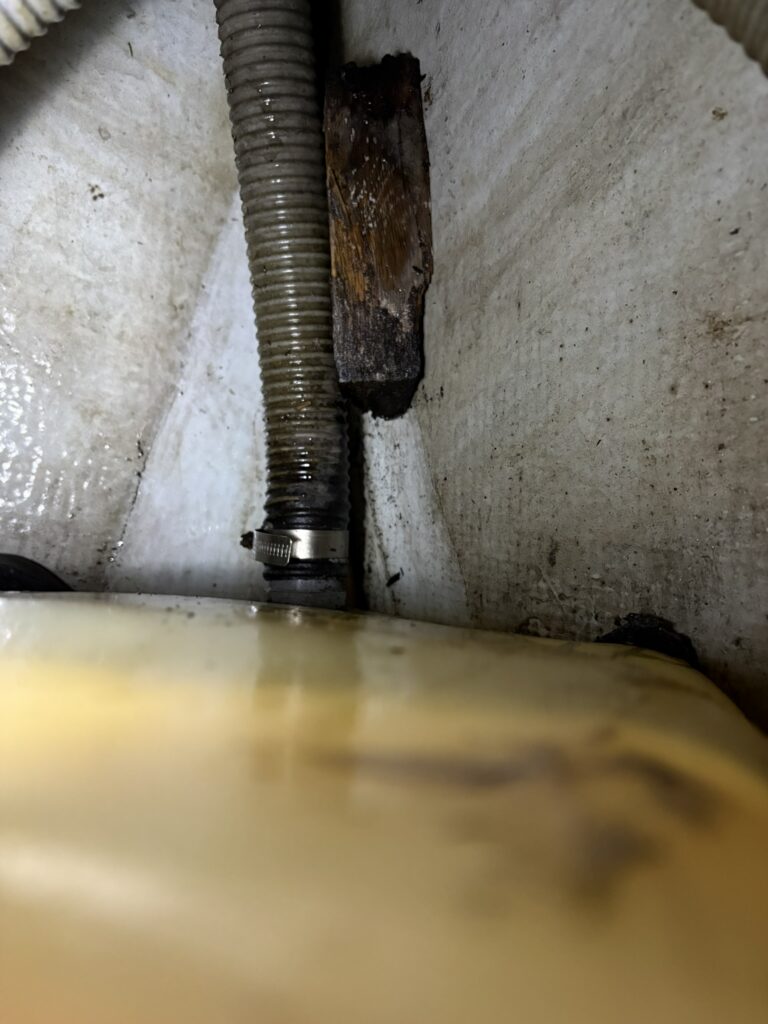
My first thought was the gear, so I quickly moved it as far aft as I could making a mess in the process. That didn’t solve the issue. There was a lot of water in the bilge, so I removed that but it didn’t change anything. I kept digging around in the bow of the boat and found clear water in front of the waste water tank…. I looked at the top hose connection where the toilet input hose attaches, which I hadn’t reattached after removing half the tank last year and the connector had some water on it. I put a light on the top of the tank and stuck my head in the starboard side access hatch just above the original electrical panel and looks at the tank, it was full again.
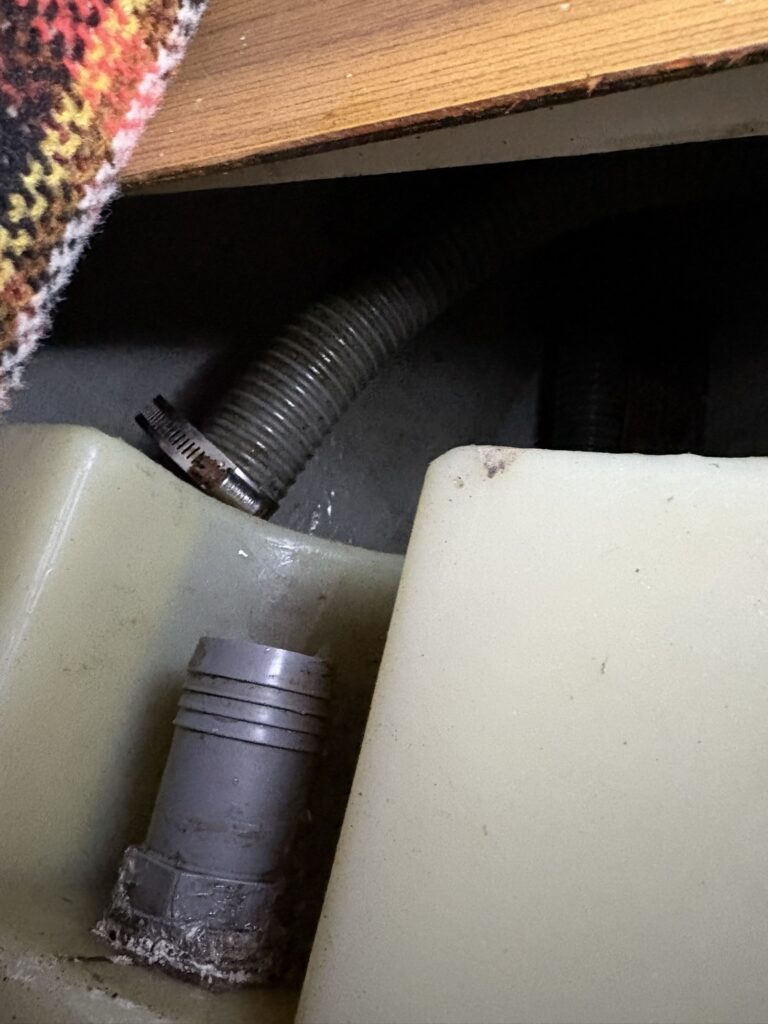
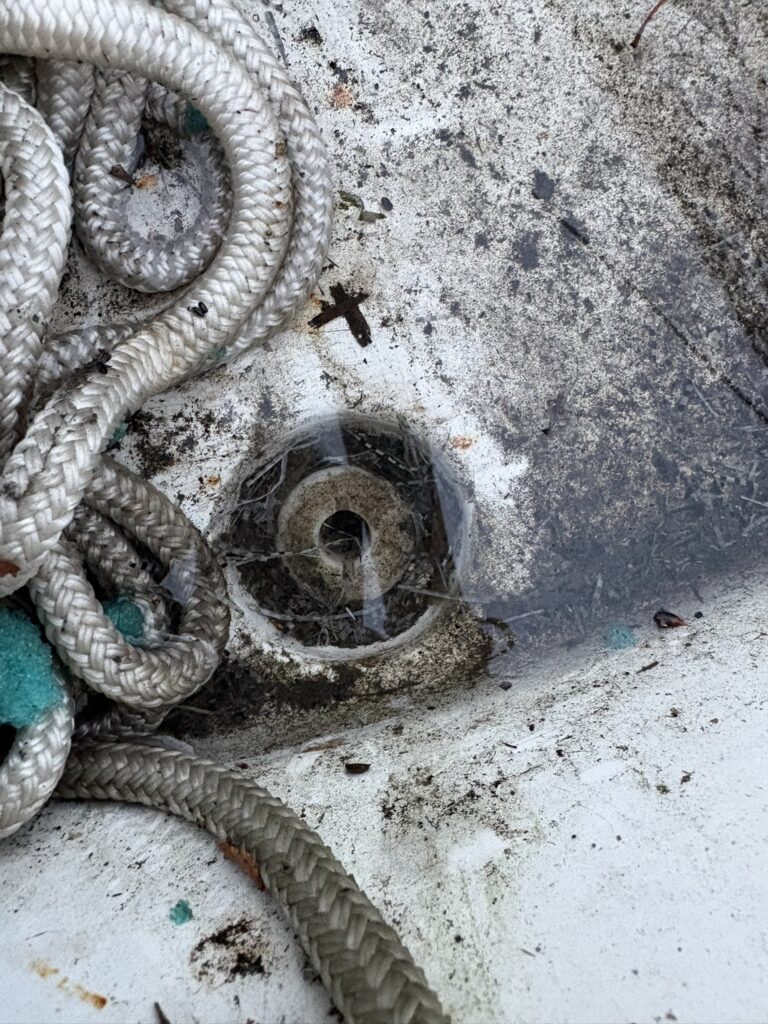
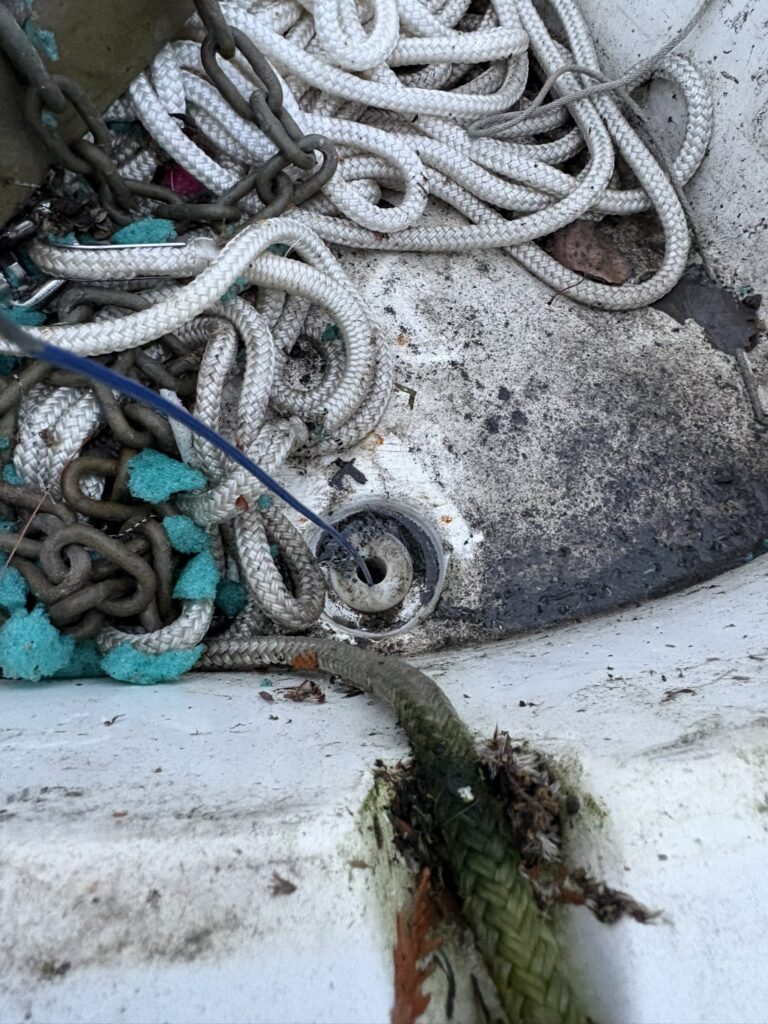
Suddenly everything made sense. We had just had 2 days of steady rain. I had been confused as to why the bilge had so much water in it but now I knew. I double and triple checked hoses, hose couplings, gate valves, and through hulls. Other than needing to be removed, everything was fine. The only connection to the tank was the air vent which is just a tiny, maybe 1/2 inch tube, and the pump out hose. Knowing the vent is a small vertical port on the port side deck the only source of water input would be the pump out hose. I checked the waste pump out hose to remind myself where it was attached and heading topside to the anchor well. I opened the anchor well to find about 4 cm (1 inch) of water sitting in it. I looked at the drain in the well and it was covered with debris. I removed the debris to find the drain blocked. So even with the pump out port cover in place, water was leaking into the pump out hose and filling the waste water tank.
Discovering this issue put my cleaning on hold. It was late at this point so I headed home and found my straightened wire coat hanger in my workbench. Yes I have a straightened coat hanger as a tool, it really is an super handy things to have around, especially since we now have mostly plastic hangers which just don’t straighten the same 😉 The next day I headed back to the boat and got to work using the straighten wire to clear the clog. I didn’t want to go to fast or to hard fearing I might damage the drain hose and adding yet another unnecessary immediate attention needed project to my list. I didn’t rush and after maybe 10 minutes of careful work the water slowly started draining out of the well, I kept working at the clog, and suddenly the water started rushing out of the well as the drain hose was now clear.
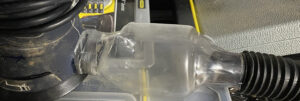
So with the cause of the problem located and partially resolved I turned my attention to removing the water in the tank. I grabbed my handy battery powered stick pump and got ready to start pumping water out of the waste tank again. I removed the tank to hose coupler to give me room to insert the stick pump in to the tank, I got the bucket placed, I flipped the pumps power switch and…. nothing. I figured it was the batteries as I had just used it the day before to pump out the bilge. I replaced the batteries with new ones and still nothing. Now unless both sets of batteries are dead, which I highly doubt my stick pump is dead. So back to the drawing board on how to remove this water.
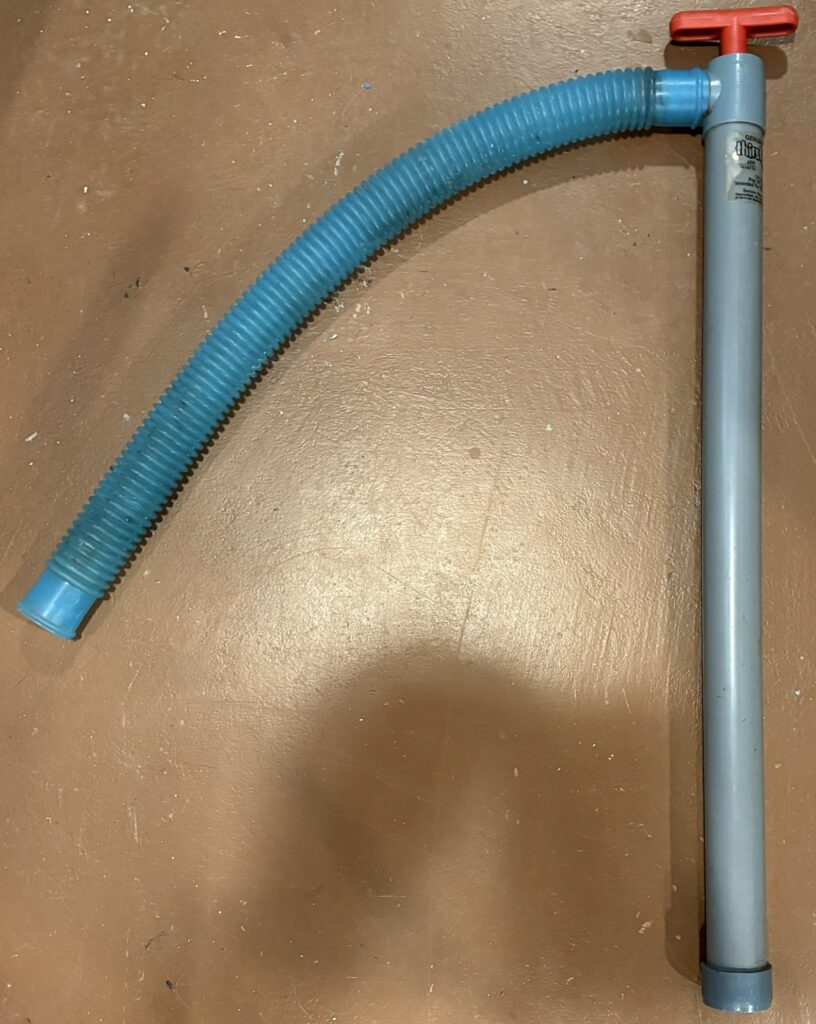
Now since I’ve removed the toilet and won’t be replacing it with a classic “marine head” there really isn’t a reason to keep the waste water tank, other than the sink drain which I was planning on diverting into a removable holding tank. So I decided that I will cut a hole in the top of the tank large enough for my hand bilge pump to fit in and use that to pump out the water. This solution presents a problem, the hose on the bilge pump is about 60 cm (2 feet) long. I ordered from Amazon a 6 foot hose to replace the existing hose. The hose is listed as a bilge pump hose with an interior diametre of 1 1/4″, I measured the existing hose and near as I can tell it’s interior diametre is 1 3/8″. I am hoping that the difference is just an inaccuracy with my tape measure. The new hose is thin PVC so even if it’s a tiny bit small I can apply some heat and stretch it over the pump’s output.
Today I will find out if the new hose will fit without needing to be stretched. Once that is done I will get my hole saw set out, find the right sized hole and get it ready to cut the tank. Along with getting the water out of the tank I need to figure out how to better seal the pump out port cap so that if the anchor well drain does clog again I don’t have water getting where it shouldn’t be, the inside of the boat.